Que tal passar um dia discutindo o mito de Narciso? Essa é a proposta da III Jornada de Literatura e Imaginário, que será realizada no dia 17 de outubro, das 8h30 às 18h30, na Faculdade de Letras da PUCRS. Professores de diversas áreas, como Literatura, Cinema, Psiquiatria, Filosofia, Linguística, História, estarão reunidos para falar sobre o tema.
As inscrições são gratuitas e podem ser feitas no local do evento: sala 305, prédio 8, PUCRS.
Sempre que posso, na melhor das hipóteses uma vez por ano, vou para Montevideo passar um final de semana longo. Adoro aquela cidade e o descanso que ela me traz. Andar pelo centro, pelas margens do rio, parar em lugares para comer muito bem, são algumas das ofertas da cidade.
Nesses últimos anos, devo ter ido umas quatro ou cinco vezes para lá. E, sempre, visito o Museu Torres Garcia. Localizado na entrada do centro histórico, está sempre de portas abertas à espera dos visitantes.
Dessa vez, foi o Torres Garcia que veio até Porto Alegre. Está em cartaz na Fundação Iberê Camargo uma exposição de obras do artista: Joaquín Torres Garcia: geometria, criação, proporção. Talvez o que eu menos tenha visto dele, nessas minhas incursões por Montevideo, são as aquarelas e os desenhos, que coloco como os destaques da exposição em Porto Alegre. São cadernos, "anotações", ilustrações de livro, que funcionam quase como crônicas desenhadas pelo artista.
Em épocas de Bienal, em que questionamentos acerca da geopolítica estão sendo feitos, senti falta do mapa invertido proposto pelo artista, que reproduzo abaixo. Também gostaria de ver mais alguns brinquedos que o artista criou. Eles são lindos. Há um par exposto na Fundação. Talvez não houvesse espaço para mais deles na mostra, que está redonda, do tamanho certo, e é uma ótima oportunidade para usar duas horas de um dia qualquer, dando de presente ao olhar boas imagens.
Passei um final de semana de junho em Berlim e amei. Estava com o Fred, Ivana e Lenara. Foi muito agradável, cheio de deliciosos cafés, caminhadas curiosas e muita conversa. Finalmente, coloquei algumas fotos no Flickr.
Hoje, eu e o Fred, fomos almoçar no centro para ver as exposições em cartaz. A da Casa de Cultura Mario Quintana já tinha aberto na semana passada, mas como eu estava com um gripão, não deu pra ir na abertura. A mostra reúne trabalho de três grupos: Arena, Atelier Subterrânea e Desvenda. É uma exposição pequena, mas super simpática. Gostei especialmente dos trabalhos do Guilherme Dable, do Túlio Pinto e do Gabriel Neto. A exposição fica em cartaz até 24 de abril. Se você for, atenção aos horários, a Galeria Augusto Meyer, onde estão os trabalhos do pessoal da Subterrânea, fecha ao meio-dia, o que é meio absurdo por se tratar de um espaço no centro da cidade, em que as pessoas podem aproveitar o horário de almoço para visitar.
Vista da sala com os trabalhos do Atelier Subterrânea.
Trabalho de Guilherme Dable
Trabalho de Túlio Pinto.
Trabalho de Guilherme Dable
O Santander Cultural está abrigando o 5º Fest Foto POA, com uma bela exposição de fotografia. O fotógrafo homenageado da mostra é o Felizardo. Gostei bastante da seleção de fotos, especialmente de uma feita em um trem para Chatres, com um casal à janela. Esta foto está localizada logo na entrada, bem no meio. No átrio, há também uma pequena mostra interessante de fotos que foram encontradas no lixo, quase todas rasgadas, compradas por Rubens Fernandes Junior na Feira do Bexiga. No segundo andar, as fotos de Marc Riboud são lindas. A exposição fica em cartaz até 1º de maio e vale muito a visita.
Por fim, não dá para deixar de falar da exposição da Regina Silveira, em cartaz na Fundação Iberê Camargo, um pouco mais pra lá do centro. Mil e um dias e outros enigmas é o nome da mostra que reúne diversos trabalhos da artista, feitos em vinil recortado e espalhados por dois andares da Fundação. A mostra pode ser vista até 29 de maio.
Peguei esta foto do Carlos Stein, do Flickr da Fundação.
No ano passado dei uma disciplina de Estruturas Narrativas na pós em Cinema Expandido na PUCRS. Nesse ano, vou dar novamente. O foco é pensar a narrativa no cinema e em outras mídias, discutir o conceito de trasmídia, entre outros. As inscrições para a pós vão até março. Mais informações no site: http://bit.ly/gVRSg0
Em janeiro, darei um mini curso de introdução à linguagem cinematográfica na Arena – um lugar super legal, dedicado à arte, em Porto Alegre. Mais informações abaixo:
Vi só um pouquinho da Bienal. Queria ter visto mais, mas não deu tempo. Espero conseguir ver mais quando eu voltar para São Paulo. Gosto muito do trabalho dos curadores - Agnaldo Farias e Moacir dos Anjos - e estava curiosa para saber o que eles tinham colocado no copo de mar dessa Bienal. (Há sempre um copo de mar para um homem navegar, verso de Jorge Lima é o título desta edição da mostra).
Já que eu tinha menos de uma hora, segui o conselho do Eduardo Nasi, fui direto ver o Abajur do Cildo Meireles. Realmente vale a pena. Publiquei uns vídeos no Youtube e fiz umas fotos. Mas é uma obra que precisa ser vista pessoalmente. Ela é muito potente. Me encheu de tristeza vê-la. Fiquei lá todos os 15 minutos da sessão das 11h30 de ontem. Ela é bela, poética e te dá um tapa na cara. Dentro do viés político da Bienal, funciona muitíssimo bem. Comecei a me sentir mal quando os homens começaram a olhar para cima para ver se ainda tinha alguém. Saí. O segurança fechou. Sessão encerrada. Ela fica tão entranhada na gente que é difícil prestar uma atenção "fresca" no resto. Então, não sei se é uma boa obra para começar. Talvez melhor para acabar.
No caminho até o Cildo, passei por outro Cildo, que são as notas de dinheiro com as Inserções em Circuitos Ideológicos. Já tinha visto no Museu da Philadelfia, junto com as garrafas de Coca-Cola, mas é tão legal, que sempre vale a pena rever. Ali pertinho, tem duas obras do Helio Oiticica, que ninguém se importa de ver também... Seja marginal, seja herói e um bólide. Faltou ver o Ninhos do Hélio. Na real, faltou ver tanta coisa...
Logo na sala ao lado tem o Barrio. Foi bem impactante ver as Situações (aquelas obras das trouxas) em fotos ampliadas. Só tinha visto em reproduções de livros e sempre muito pequenas. Foi uma boa experiência ver as fotos grandes e num conjunto maior também.
Outra coisa que eu vi no caminho foi uma instalação do Eduardo Coimbra, chamada Luz Natural, em que lâmpadas fluorescentes ganham ares de céu com nuvens. Um trabalho bem bonito, que as fotos não conseguem registrar direito.
Quase chegando no Abajur tem um vídeo do Paulo Bruscky, que também me chamou atenção: Arte/Pare, de 1973. É um vídeo de uma ação muito simples, de fechar uma rua com uma fita vermelha, mas que visto com o título tem um impacto legal. A foto lá de cima é do trabalho.
Também não deixei de dar uma passada para ver os desenhos do Gil Vicente matando políticos. E, por falar em obras polêmicas, acabei não vendo o Nuno Ramos com os urubus... acho que perdi bastante. Imagino que eles deviam dar muito mais força à obra.
Por fim, depois de finalmente chegar no Abajur, resolvi sair pelo outro lado e ganhei de presente o vídeo Tornado, do Francis Alÿs. Gosto muito dele. Lembram da Fé move Montanhas, estava aqui em Porto Alegre na última Bienal? O vídeo do tornado é tão incrível quanto. Uma bela imagem para encerrar a minha primeira visita a essa Bienal.
Ontem, fiz uma visita à jato a São Paulo e aproveitei para visitar um pedacinho da Bienal e o MAM/SP. Sobre a Bienal, falo depois, agora queria falar sobre a exposição do Ernesto Neto no MAM, que visitei com o Eduardo Nasi.
Pode tocar nas obras, pode pisar, pode subir, pode sentar, pode tocar piano e instrumentos de percussão, pode deitar numa cama de bolinhas. Esse é o clima da mostra, que segue a linha de trabalho do artista, mas que dessa vez opta pelo lado lúdico da obra de arte. Nem preciso dizer que as crianças adoram. Estava lá um menininho que não devia ter mais de três anos, completamente encantado com a mostra. Mas o clima de playground acaba contaminando os adultos também. Foi sentar num balanço, que a minha perspectiva da exposição mudou.
Na aposta de um visual colorido e alegre, Ernesto Neto acaba nos transportando para as nossas próprias infâncias. Seria uma exposição sobre memória? Talvez. Talvez também seja sobre a reconstrução de um mundo perdido (ou encontrado). Ou, simplesmente sobre a possibilidade de aceitar um Dengo, como o nome da mostra propõe.
Mas, para curtir, tem que entrar na onda, olhar, tocar, sentar, pisar...
Acabo de fazer uma pausa no trabalho da minha dissertação para tomar um café, respirar um pouco e começar um alfajor (já experimentaram os Cachafaz? Tem um que é de maizena com doce de leite e coco em volta que é incrível). Resolvi ver um vídeo no Youtube e acabei vendo este, que a minha professora de francês mandou:
Fiquei muito tocada com a história toda. Por alguns motivos.
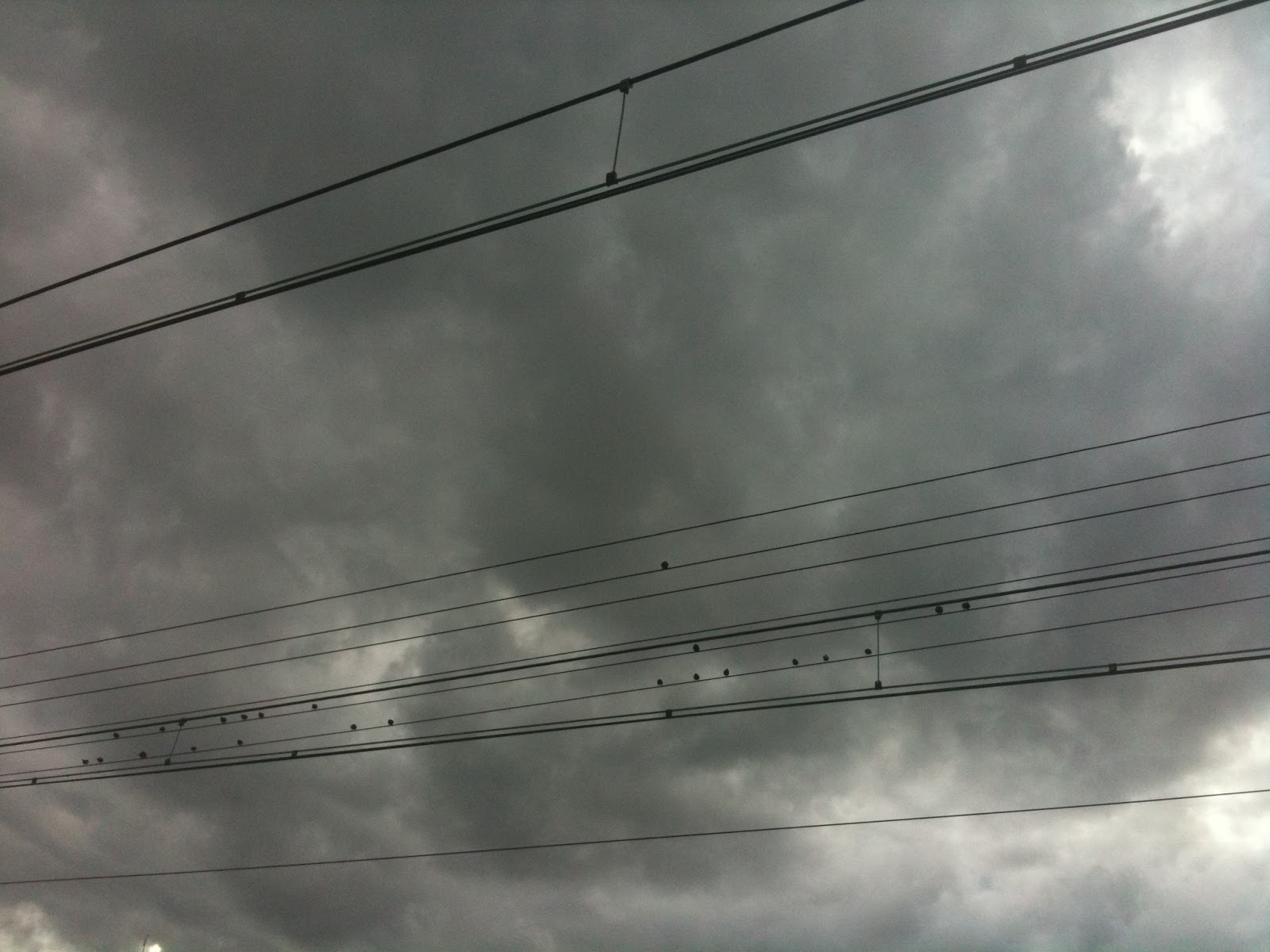
Primeiro também gosto de fotografar pássaros em fios:
Aqui tem um pequeno vídeo dos mesmos pássaros da foto cinza de cima:
Segundo, que quando eu fiz o vídeo com o Philip Glass...
... também parti de uma foto, de fios de luz, que para mim, lembravam uma partitura:
São pequenos detalhes que tornam o dia melhor: café, cachafaz, cerejas naturais, fios, pássaros e música.
Hoje, às 19h, abre uma exposição bem legal na Fundação Iberê Camargo: Convivências. Com curadoria de Jailton Moreira, a mostra reúne os artistas que foram contemplados nos dez anos da Bolsa Iberê Camargo. Isso significa é uma mostra de arte contemporânea, com trabalhos de vários artistas jovens.
Na abertura, terá performances de dois artistas: Letícia Cardoso e Ronald Duarte. E, também será lançado o próximo edital da Bolsa, que nesse ano vai selecionar dois artistas para residências Estados Unidos (Nova York) e Argentina (Buenos Aires).
Mais informações sobre a exposição, estão disponíveis aqui.
Abaixo, você pode ver um audioslide que a Zero Hora fez:
No próximo sábado, às 17h, será lançado na Livraria Saraiva, do Shopping Praia de Belas, o livro 40, produzido pelos alunos da Oficina Literária da PUCRS, a Oficina do Assis. O livro também comemora os 25 anos da Oficina. Eu participei da oficina no ano passado e o livro traz quatro contos meus.
Na quarta-feira, dia 1º de setembro, das 19h30 às 21h, será realizada a aula inaugural 2010/2 da Faculdade de Letras da PUCRS. Nesse semestre, a aula será uma homenagem aos 25 anos da Oficina Literária da PUCRS, conhecida por nós carinhosamente como Oficina do Assis Brasil.
O evento será realizado no auditório da Famecos (prédio 7) e contará com uma mesa redonda com a presença de escritores que passaram pela Oficina e se destacam no cenário literário nacional: Cíntia Moschovich, Daniel Galera, Marcelo Spalding, Robertson Frizero e Ruben Penz.
Eu fiz a oficina no ano passado e foi uma experiência bem especial. Aprendi muitas coisas, que me fizeram pensar e repensar o ato de escrita, seja ele literário ou não. Em setembro, será lançado o livro da Oficina 40 (sim! 25 anos e 40 edições), do qual faço parte. Em breve mais detalhes. Fica aqui a minha indicação para quem procura uma oficina literária.
Meus gatinhos são muito diferentes um do outro. No início, não se gostaram muito, mas isso foi há mais de um ano. Hoje, correm juntos pela casa, fazem companhia um para o outro e, no inverno, adoravam dormir juntinhos. Não são uns amores?
Nos últimos tempos (não faz tão pouco tempo assim, na verdade), adquiri o hábito de dar uma olhada diariamente no NYTimes. Acabo lendo os textos sobre tecnologia, arte, comunicação, estilo de vida e tal. Sempre acho coisas bem legais. A maioria delas tenho publicado no blog do meu grupo de pesquisa do mestrado, o Fragmentos de Sentido. Provavelmente, quando eu terminar o mestrado no final do ano, vou parar de alimentar o blog e vou começar a postar os textos por aqui.
Hoje, recomendo esse texto sobre o twitter do NYTimes de sexta:
The Way We Live Now
I Tweet, Therefore I Am
Published: July 30, 2010 By PEGGY ORENSTEIN
On a recent lazy Saturday morning, my daughter and I lolled on a blanket in our front yard, snacking on apricots, listening to a download of E. B. White reading “The Trumpet of the Swan.” Her legs sprawled across mine; the grass tickled our ankles. It was the quintessential summer moment, and a year ago, I would have been fully present for it. But instead, a part of my consciousness had split off and was observing the scene from the outside: this was, I realized excitedly, the perfect opportunity for a tweet.
I came late to Twitter. I might have skipped the phenomenon altogether, but I have a book coming out this winter, and publishers, scrambling to promote 360,000-character tomes in a 140-character world, push authors to rally their “tweeps” to the cause. Leaving aside the question of whether that actually boosts sales, I felt pressure to produce. I quickly mastered the Twitterati’s unnatural self-consciousness: processing my experience instantaneously, packaging life as I lived it. I learned to be “on” all the time, whether standing behind that woman at the supermarket who sneaked three extra items into the express check-out lane (you know who you are) or despairing over human rights abuses against women in Guatemala.
Each Twitter post seemed a tacit referendum on who I am, or at least who I believe myself to be. The grocery-store episode telegraphed that I was tuned in to the Seinfeldian absurdities of life; my concern about women’s victimization, however sincere, signaled that I also have a soul. Together they suggest someone who is at once cynical and compassionate, petty yet deep. Which, in the end, I’d say, is pretty accurate.
Distilling my personality provided surprising focus, making me feel stripped to my essence. It forced me, for instance, to pinpoint the dominant feeling as I sat outside with my daughter listening to E.B. White. Was it my joy at being a mother? Nostalgia for my own childhood summers? The pleasures of listening to the author’s quirky, underinflected voice? Each put a different spin on the occasion, of who I was within it. Yet the final decision (“Listening to E.B. White’s ‘Trumpet of the Swan’ with Daisy. Slow and sweet.”) was not really about my own impressions: it was about how I imagined — and wanted — others to react to them. That gave me pause. How much, I began to wonder, was I shaping my Twitter feed, and how much was Twitter shaping me?
Back in the 1950s, the sociologist Erving Goffman famously argued that all of life is performance: we act out a role in every interaction, adapting it based on the nature of the relationship or context at hand. Twitter has extended that metaphor to include aspects of our experience that used to be considered off-set: eating pizza in bed, reading a book in the tub, thinking a thought anywhere, flossing. Effectively, it makes the greasepaint permanent, blurring the lines not only between public and private but also between the authentic and contrived self. If all the world was once a stage, it has now become a reality TV show: we mere players are not just aware of the camera; we mug for it.
The expansion of our digital universe — Second Life, Facebook, MySpace, Twitter — has shifted not only how we spend our time but also how we construct identity. For her coming book, “Alone Together,” Sherry Turkle, a professor at M.I.T., interviewed more than 400 children and parents about their use of social media and cellphones. Among young people especially she found that the self was increasingly becoming externally manufactured rather than internally developed: a series of profiles to be sculptured and refined in response to public opinion. “On Twitter or Facebook you’re trying to express something real about who you are,” she explained. “But because you’re also creating something for others’ consumption, you find yourself imagining and playing to your audience more and more. So those moments in which you’re supposed to be showing your true self become a performance. Your psychology becomes a performance.” Referring to “The Lonely Crowd,” the landmark description of the transformation of the American character from inner- to outer-directed, Turkle added, “Twitter is outer-directedness cubed.”
The fun of Twitter and, I suspect, its draw for millions of people, is its infinite potential for connection, as well as its opportunity for self-expression. I enjoy those things myself. But when every thought is externalized, what becomes of insight? When we reflexively post each feeling, what becomes of reflection? When friends become fans, what happens to intimacy? The risk of the performance culture, of the packaged self, is that it erodes the very relationships it purports to create, and alienates us from our own humanity. Consider the fate of empathy: in an analysis of 72 studies performed on nearly 14,000 college students between 1979 and 2009, researchers at the Institute for Social Research at the University of Michigan found a drop in that trait, with the sharpest decline occurring since 2000. Social media may not have instigated that trend, but by encouraging self-promotion over self-awareness, they may well be accelerating it.
None of this makes me want to cancel my Twitter account. It’s too late for that anyway: I’m already hooked. Besides, I appreciate good writing whatever the form: some “tweeple” are as deft as haiku masters at their craft. I am experimenting with the art of the well-placed “hashtag” myself (the symbol that adds your post on a particular topic, like #ShirleySherrod, to a stream. You can also use them whimsically, as in, “I am pretending not to be afraid of the humongous spider on the bed. #lieswetellourchildren”).
At the same time, I am trying to gain some perspective on the perpetual performer’s self-consciousness. That involves trying to sort out the line between person and persona, the public and private self. It also means that the next time I find myself lying on the grass, stringing daisy chains and listening to E. B. White, I will resist the urge to trumpet about the swan.
Peggy Orenstein is a contributing writer. Her book "Cinderella Ate My Daughter" will be published this winter.